

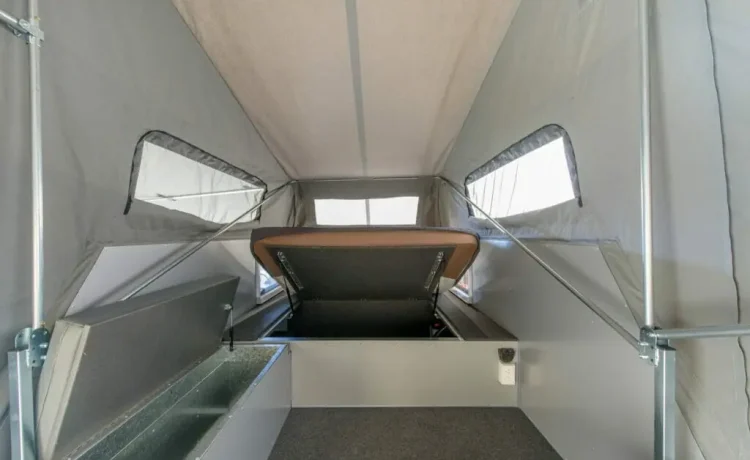
Choosing between a hard floor and a soft floor camper trailer shapes every trip you take. It decides how fast you set up, how much you tow and how you sleep when the weather turns. Both designs work well in Australia, but they suit different travellers.
Many buyers browse motorhomes for sale in Australia before settling on a camper trailer. Trailers usually cost less, tow behind a 4WD and let you unhitch at camp. Once you choose a trailer, the floor type is the next decision.
A hard floor trailer has a rigid lid that flips over to form the tent floor. A soft floor trailer folds out a canvas tent, with the floor resting on the ground. This guide compares setup time, space, weight, durability and weather resistance so you can choose with confidence.
Setup Time
Hard floor trailers win on speed. Most flip open in 5 to 15 minutes, with the bed already made inside. Many allow a quick setup without the annex for overnight stops.
Soft floor trailers take longer. Expect 15 to 30 minutes for the main tent and up to an hour with the full annex, poles and pegs. Practice speeds things up, but setup still takes more effort.
Choose hard floor if you move camp every day or two.
Space and Layout
Soft floor trailers give more living space. The tent covers a large floor area, and annexes can add rooms for kids or gear. That suits families on long stays.
Hard floor trailers have a tighter footprint. The raised floor keeps you off the dirt, and most include a slide-out kitchen and plenty of internal storage.
Weight and Towing
Soft floor trailers are generally lighter, often with a tare of 700 to 1,200 kilograms. That suits more tow vehicles and leaves room for payload.
Hard floor trailers usually weigh 1,200 to 2,000 kilograms. Check your vehicle’s towing capacity and ball weight limit, then weigh the loaded rig before a long trip.
Durability and Off-Road Use
Both designs handle corrugated roads when built on a strong chassis with independent suspension. Soft floor trailers have a simpler body and lower centre of gravity, which helps on tight, rough tracks. Hard floor trailers carry more hinges, struts and seals. Inspect these after every rough drive.
Weather Resistance
Hard floor trailers lift you off wet ground, mud and insects. They handle sudden storms well, and you can pack up fast when rain moves in.
Soft floor canvas sits on the ground and needs a quality tarp underneath. Packing up in rain is slower, and wet canvas must dry within a day or two to prevent mould. Factor this in for wet season travel in the tropical north.
Which Suits Your Touring Style?
- Frequent moves and short stays: hard floor
- Families needing room: soft floor
- Lighter tow vehicles: soft floor
- Wet or coastal regions: hard floor
- Long base camps: soft floor
Hard floor trailers set up fast, keep you off the ground and cope better with rain. Soft floor trailers weigh less, cost less and offer more living space. List how often you move camp, how many people travel and what your vehicle can tow. Then inspect both types in person and practise a full setup before you buy.